
The Board of Forestry adopted Zone 0 rules in August 2026, then withdrew them from state legal review (OAL) on September 8, 2026. No statewide Zone 0 rule is in effect yet.
Zone Zero Guide
San Diego County
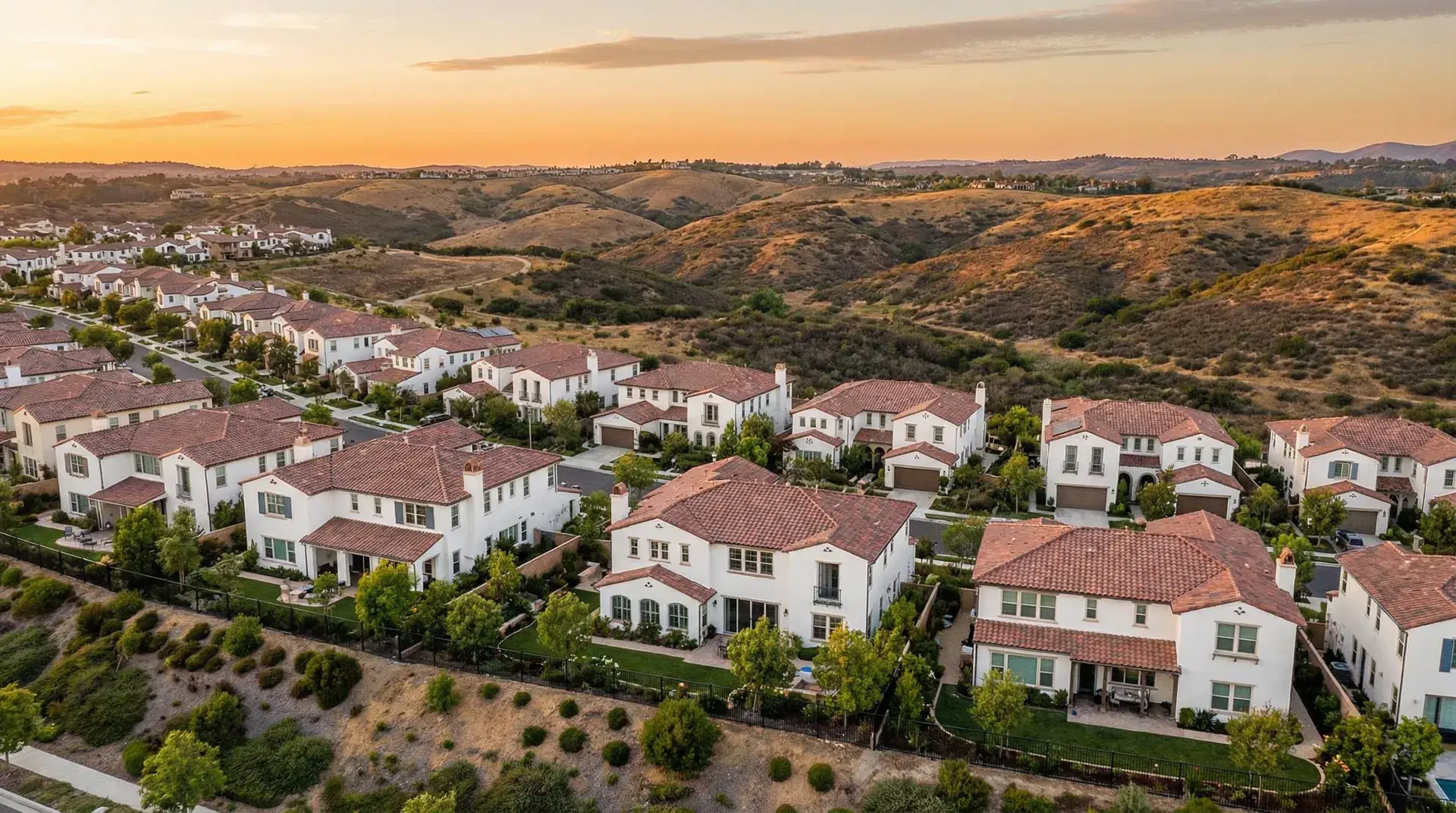
Check An Address For Zone Zero — Before You Build!
The definitive resource for San Diego County homeowners navigating California's ember-resistant zone regulations. Understand the law, check your property, and protect your home.
Zone Coverage
0–5 ft
from any structure
City Guidance Target
Feb 2027
verify local jurisdiction
Enforcement
Education First
phased rollout
Legislation
AB 3074
PRC §4291
Step One
Understand the Law
What is Zone Zero?
Zone Zero — officially the "Ember-Resistant Zone" — is a 0 to 5 foot area measured from a structure. AB 3074 directed the state to create this zone. The Board adopted emergency regulations on August 19, 2026; the statewide emergency rules become effective only after Office of Administrative Law review and filing.
The purpose is to create an ember-resistant perimeter that prevents wind-driven embers from igniting materials close to your home during a wildfire event. This is especially critical in San Diego County, where over 817,000 acres are designated as Very High Fire Hazard Severity Zones.
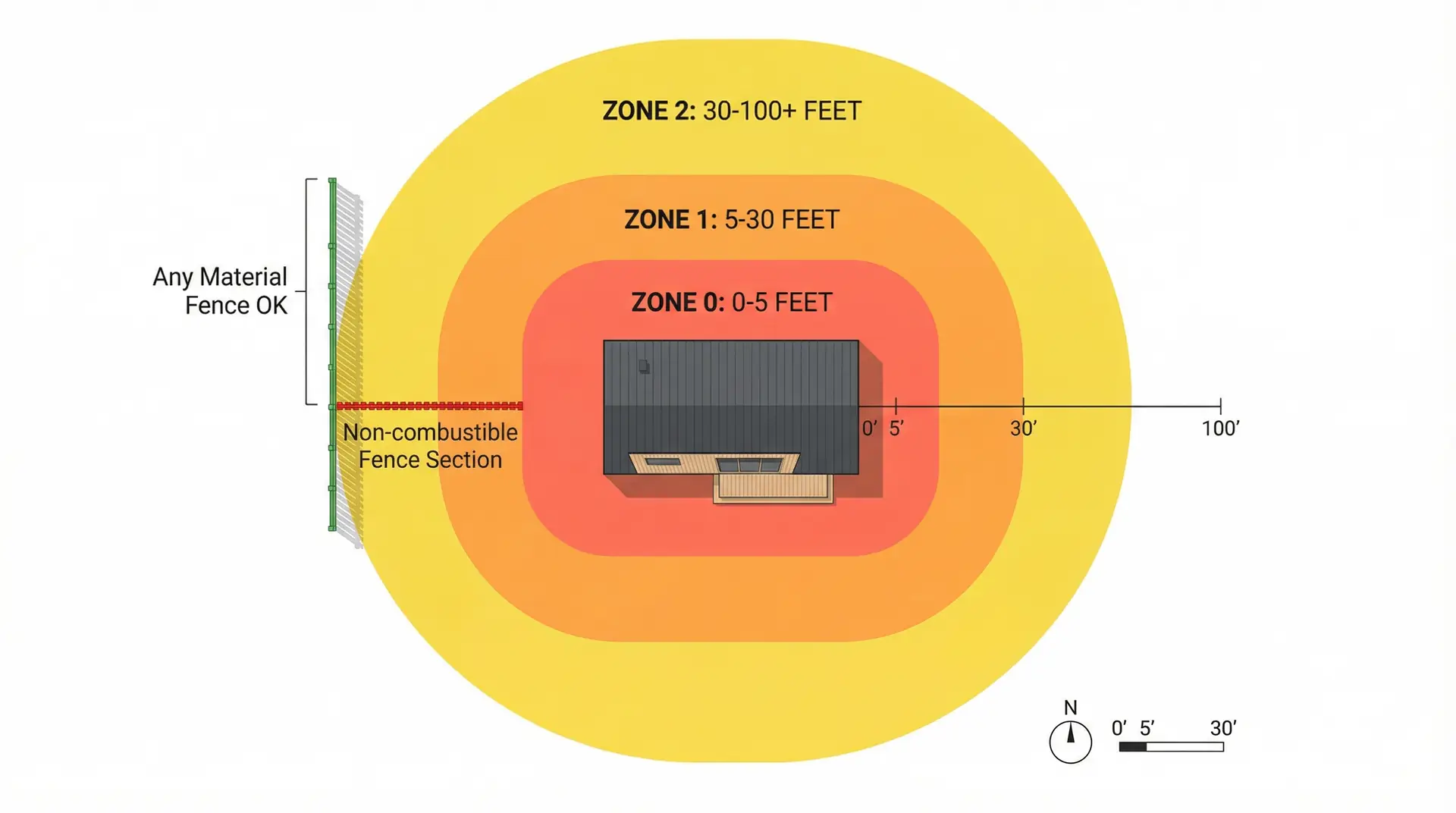
Defensible Space Zones: Zone 0 (0–5 ft) · Zone 1 (5–30 ft) · Zone 2 (30–100 ft)
Zone 0
0–5 feet
Ember-Resistant Zone. ALL combustible materials must be removed. Fences, gates, plants, mulch, and stored items within this zone must be non-combustible.
Zone 1
5–30 feet
Lean, Clean, and Green Zone. Thin vegetation, remove dead plants, maintain spacing between shrubs and trees. Fence lines in this zone can be combustible.
Zone 2
30–100 feet
Reduced Fuel Zone. Create horizontal and vertical spacing between plants and trees. Remove dead vegetation and debris. Standard fencing materials are acceptable.
There Are Two Different Fire Zone Maps — Which One Applies to You?
Many San Diego homeowners are confused because they’ve seen two different maps online and gotten different results for the same address. Here’s why: California has a state map (managed by CAL FIRE) and San Diego has its own local map (managed by the City or County). If either map shows your property in a Very High Fire Severity Zone, Zone Zero applies to you.
CAL FIRE State Map
State Responsibility Area (SRA)
- ›Who enforces it: CAL FIRE & San Diego County Fire Authority
- ›Where it applies: Unincorporated county — rural and wildland-adjacent areas outside city limits
- ›Examples: Ramona, Alpine, Julian, Fallbrook, Descanso, Borrego Springs, Warner Springs
- ›Check it at: CAL FIRE FHSZ Viewer
San Diego City/County Map
Local Responsibility Area (LRA)
- ›Who enforces it: City of San Diego Fire-Rescue & local fire departments
- ›Where it applies: Inside incorporated city limits — adopted by each city separately
- ›Examples: City of San Diego, El Cajon, Santee, Poway, Escondido, Carlsbad, Encinitas
- ›Check it at: sandiego.gov/fire
Not sure which map applies to you? You don't need to know.
Our property checker below searches both maps at once. Just enter your address.
Step Two
Check Your Property
Is Your Property in a Fire Zone?
Use our interactive map to check if your San Diego property falls within a Very High Fire Hazard Severity Zone. Zone Zero rules are aimed at properties in these zones. The statewide rules are not in effect yet, so check your city's local guidance too.
Covers incorporated cities — this is the primary map for most San Diego homeowners. Enforced by your local fire department (City of San Diego Fire-Rescue, etc.).
Common areas: City of San Diego, El Cajon, Santee, La Mesa, Poway, Escondido, Carlsbad, Encinitas, Chula Vista, National City
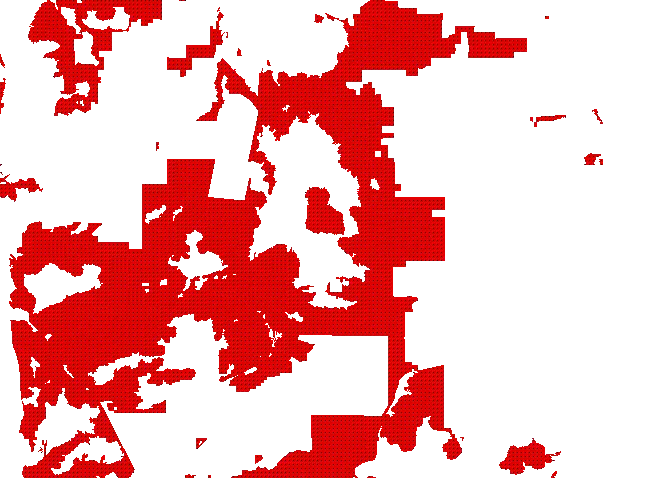
Map data: California Department of Forestry and Fire Protection (CAL FIRE). SRA zones effective April 1, 2024. LRA zones recommended March 24, 2025. For official confirmation, visit CAL FIRE FHSZ Viewer.
Check Your Property
Enter your address to check fire hazard zone status
This tool queries official 2025 Fire Hazard Severity Zone boundary data from CAL FIRE (SRA) and recommended LRA zones. For official confirmation, check the CAL FIRE FHSZ viewer or the San Diego LRA map or call San Diego Fire-Rescue at (619) 531-2000.
Disclaimer: This tool is provided for general informational purposes only and does not constitute a professional fire-zone assessment, legal advice, or official compliance determination. Results are based on publicly available CAL FIRE map data which may not reflect the most recent boundary updates. Property owners should independently verify their fire hazard severity zone status with their local fire authority or a qualified inspector before making compliance decisions. Tom Sawyer Fence Painting assumes no liability for actions taken based on the results of this tool.
Step Three
What to Do
Does Your Fence Need to Change?
Start by measuring 5 feet from the structure. Under the adopted statewide text, a combustible fence or gate attached to an occupied structure will need a five-foot noncombustible transition once the rule is effective, and new combustible fences or gates are not allowed in Zone 0. City of San Diego guidance may require more within the full 0–5 foot area, so verify locally before quoting or building.
YOUR HOUSE
ZONE 0 — Within 5 feet
← 5 ft →
BEYOND 5 FEET
Within 5 ft of your house
Attached combustible fences and gates are the key statewide transition issue. City of San Diego guidance also calls for addressing combustible fencing, gates, and arbors inside Zone 0.
More than 5 ft from your house
The statewide Zone 0 rule does not extend beyond five feet, but permits, property-line rules, HOA standards, and other local fire codes can still apply.
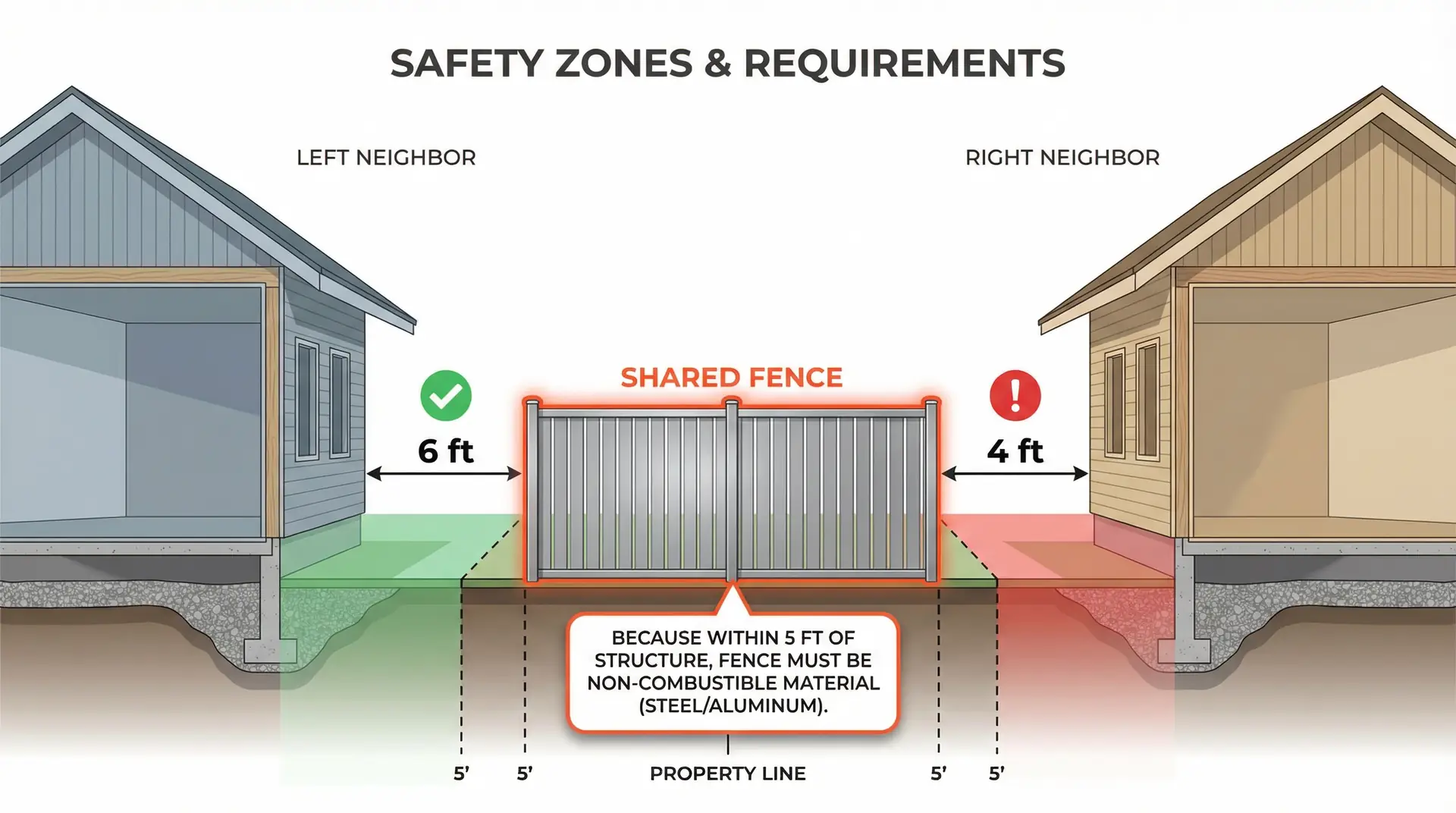
Shared Fence Compliance
If a shared fence is within five feet of either structure, it may fall inside that property's Zone 0. Attachment details and local guidance determine the required work, so both owners should verify the plan with the enforcing fire authority before agreeing on cost.
Fence Material Requirements
Wood fencing
Including cedar, redwood, pine
Vinyl / PVC fencing
Melts and ignites easily
Composite materials
Contains combustible components
Fire-retardant treated wood
Still combustible — does NOT meet ASTM E136
Bamboo fencing
Highly combustible
Aluminum
Most popular — lightweight, durable, low maintenance
Steel / Wrought Iron
Strong, classic look, may need rust treatment
Masonry / Concrete Block
Maximum durability, highest cost
Gabion (stone in wire mesh)
Modern aesthetic, excellent fire resistance
Chain Link (galvanized)
Budget-friendly, meets non-combustible standard
Step Four
Common Questions
What Does Compliance Actually Cost?
One of the biggest questions homeowners have. Here is what we know from public sources and our own experience working with San Diego properties.
$35K–$50K
Full property compliance (contractor quotes)
Cited by Vista Fire Chief for complete Zone 0 compliance including fence replacement, landscaping, and hardscaping.
31–35%
Reduction in projected insurance losses
CA Dept. of Insurance study (March 2026) found wildfire-standard homes reduce Average Annual Loss by one-third.
~3%
Added cost per home for wildfire standards
The same study found that building to wildfire-prepared standards adds roughly 3% to per-home construction costs.
Not every property needs $50,000 in work
The $35K–$50K figure includes full landscaping, hardscaping, and fence replacement for worst-case properties. Many homeowners only need to address the fence sections within 5 feet of their home. A fence-only project can be significantly less. Call us at (858) 754-9842 for a free assessment — we will tell you exactly what applies to your property and what does not.
Your Fence Contractor's
Painting & Staining Partner
San Diego fence contractors refer their customers to us for professional staining and painting — before install (pre-staining) and after. We handle the finish; they handle the build. If your fence company doesn't offer staining, ask them about us.
Free Staining Estimate
C-33 Licensed Painter
Pre-Stain Specialists
Trusted Resources
Where to Get the Facts
Zone Zero information is spread across state, city, and county websites. We have organized the most important sources below so you know exactly where to go and what each one tells you.
Not Sure Where to Start?
If you just heard about Zone Zero and feel overwhelmed, here is the simplest path:
- 1Check your address using the — it searches both maps at once.
- 2Read the City of San Diego page (first card below under "Local Government") — it is the clearest plain-English explanation of what you need to do.
- 3Call us at (858) 754-9842 if you need help understanding what applies to your fence — we will walk you through it for free.
California State Agencies
The state sets the rules. These are the agencies that wrote and enforce Zone Zero.
CAL FIRE — Defensible Space
California Department of Forestry and Fire Protection
Why it matters: This is the official source for what Zone Zero means and what you must remove within 5 feet of your home.
Explains the 0–5 ft ember-resistant zone, what must be removed (wood fences, mulch, plants touching the house), and enforcement timelines.
CAL FIRE — FHSZ Interactive Map
California Department of Forestry and Fire Protection
Why it matters: Type in your address to see if you are in a Very High, High, or Moderate fire zone. If it says VHFHSZ, Zone Zero applies to you.
Official ArcGIS map viewer covering the State Responsibility Area (SRA) — primarily unincorporated county land outside city limits.
CAL FIRE — Home Hardening
California Department of Forestry and Fire Protection
Why it matters: Zone Zero is not just about fences. This page covers vents, windows, roofing, and decking — everything that makes your home resist embers.
Guidance on ember-resistant building materials that work alongside Zone Zero fencing and landscaping requirements.
Board of Forestry — Zone Definitions
California Board of Forestry and Fire Protection
Why it matters: This is the regulatory body that formally created Zone 0, Zone 1, and Zone 2. They publish the official definitions and hold public meetings on rule changes.
Hosts the official zone definitions and upcoming rule changes. Useful if you want to understand the legal basis for the zones.
Office of the State Fire Marshal
Fire Hazard Severity Zones (LRA)
Why it matters: If you live inside a city (not unincorporated county), this is the state agency that oversees your local fire zone map.
Publishes the Local Responsibility Area (LRA) FHSZ maps and the statewide LRA viewer for all California counties.
AB 3074 — The Actual Law
California Legislature (2020)
Why it matters: This is the bill that created Zone Zero. It is dense legal language, but it is the definitive source if you need to settle a dispute or verify a requirement.
The original 2020 legislation defining the 0–5 ft ember-resistant zone and the compliance deadlines for existing and new structures.
San Diego Local Government
Your city or county fire department is who actually inspects your property. These are the local pages that matter most.
Defensible Space — Property Owner Guide
San Diego Fire-Rescue Department
Why it matters: A step-by-step walkthrough of what inspectors check in all three zones. You can also schedule a free inspection through this page.
Covers all three defensible space zones (0, 1, 2) with photos showing compliant vs. non-compliant examples.
San Diego — Fire Hazard Zone Map
San Diego Fire-Rescue Department
Why it matters: If you live inside the City of San Diego, this is the map that determines whether Zone Zero applies to you. It is different from the CAL FIRE state map.
The city-adopted Local Responsibility Area (LRA) fire hazard severity zone map for properties inside city limits.
San Diego County Fire Authority
County of San Diego
Why it matters: If you live outside city limits (Ramona, Alpine, Julian, Fallbrook, etc.), this is the agency that enforces Zone Zero on your property.
Enforces Zone Zero for unincorporated areas using the CAL FIRE State Responsibility Area (SRA) map. Contact for inspections outside city limits.
2026 Consolidated Fire Code (PDF)
County of San Diego
Why it matters: The full legal fire code with the specific fence and gate standards. This is the document inspectors reference when they visit your property.
Includes the specific fence, gate, and accessory structure standards that apply in Very High Fire Hazard Severity Zone parcels.
SDG&E Land Services
San Diego Gas & Electric
Why it matters: If your fence is near a power line, gas line, or utility easement, you must contact SDG&E before building. Permits can take 6–12 months.
Provides encroachment permit applications and easement boundary information for fence projects near utility infrastructure.
Fire Safe Council — Free Home Assessment
Fire Safe Council of San Diego County
Why it matters: A free, voluntary program where trained assessors visit your home and tell you exactly what needs to change. No cost, no obligation.
The 2026 Home Assessment Program helps residents identify wildfire risks and create a personalized compliance plan at no charge.
Earlier Local Reporting (March 2026)
Historical San Diego context published before the Board's August 2026 emergency-rule action. Current items appear in Latest Updates below.
Vista Fire Defers Zone 0 Enforcement by 2 Years
Vista Fire Department announced it will defer Zone 0 enforcement for 2 additional years due to the high cost of compliance. The fire chief cited contractor quotes of $35,000 to $50,000 per property. Zones 1 and 2 enforcement begins May 2026. California Conservation Corps stipends are available for financially struggling residents.
What this means for you: If you are in Vista, you have more time for Zone 0 specifically, but Zones 1 and 2 enforcement starts soon. Other cities may follow Vista's lead — or they may not. Do not assume your city will defer.
CA Insurance Study: Wildfire Standards Cut Losses by One-Third
A landmark study by the California Department of Insurance and NAIC found that rebuilding to wildfire-prepared standards reduces projected insurance losses by 31–35%. The study specifically recommends pairing building standards with Zone 0 requirements and fence/accessory structure standards. The cost increase is roughly 3% per home.
What this means for you: Compliance is not just about avoiding fines. Homes that meet Zone Zero standards are significantly more insurable. This could affect your premiums and whether private insurers will cover your property at all.
News Coverage
What local and national media are reporting. Each article includes a summary so you know what to expect before clicking.
Strict wildfire safety rules will soon apply to much of urban San Diego
Key takeaway: Best overview of how Zone Zero affects urban San Diego neighborhoods. Includes interviews with the Assistant Fire Marshal on the phased enforcement timeline.
City of San Diego will implement state-mandated Zone Zero fire clearance
Key takeaway: Good video explainer of the 5-foot clearance rule. Shows what fences, gates, and landscaping look like before and after compliance.
New wildfire safety rules for San Diego homes take effect today
Key takeaway: Covers the day Zone Zero took effect. Clarifies that existing homeowners have until February 2027 and explains what inspectors will check.
San Diego residents raise questions on 'Zone Zero'
Key takeaway: Answers the most common homeowner questions: what counts as flammable, whether shared fences apply, and how enforcement actually works.
Zone Zero rules to impact majority of Rancho Bernardo, Poway properties
Key takeaway: At least 250,000 San Diego parcels will need to comply. Warns about contractor demand surges and price increases as the 2027 deadline nears.
San Diego fast-tracked new fire-safety rules — here's what homeowners should know
Key takeaway: The most comprehensive newspaper explainer. Covers how San Diego accelerated adoption and why thousands of homeowners need to act before February 2027.
California cities adopt Zone Zero as wildfire risk reshapes urban planning
Key takeaway: National perspective on how Zone Zero is spreading beyond San Diego. Berkeley is now adopting similar rules, signaling this is a statewide trend.
New San Diego Fire Prevention Rules Introduce 'Zone Zero'
Key takeaway: Important if you are buying or selling. Covers how Zone Zero affects property transactions, disclosure requirements, and rental vs. owner-occupied timelines.
Zone Zero, Defensible Space, and Other Ways to Protect a Home From Wildfire
Key takeaway: Explains the science behind the 5-foot ember-resistant zone. Good for understanding why the rule exists, not just what it requires.
State-Mandated 'Zone Zero' Requirements Set to Go into Effect
Key takeaway: Official announcement coverage from the City of San Diego with the path to compliance for existing homeowners.
Zone Zero: What California Homeowners Need to Know About New Wildfire Safety Rules
Key takeaway: Practical advice from a local real estate perspective. Notes that grace periods may extend to 2027–2029 for many properties. Suggests replacing organic mulch with gravel, river rock, or decomposed granite.
Vista Fire continues work with homeowners to reduce wildfire risk
Key takeaway: Vista is deferring Zone 0 enforcement for 2 years due to costs ($35K–$50K per property). Zones 1 and 2 enforcement starts May 2026. Conservation Corps stipends available for low-income residents.
News articles are linked for informational purposes. Tom Sawyer Paint does not control third-party content. For binding compliance guidance, always refer to official government sources listed above.
Latest Updates
Recent legal and regulatory changes affecting fire zone compliance. Updated weekly.
Poway Fire Workshops Detail Existing-Home Zone 0 Timeline
At September 8 and 10 workshops, Poway fire officials emphasized education and voluntary compliance and described a January 2030 horizon for existing homes to meet state minimums. The workshops identified wood fencing within five feet of a structure as a longer-term project; no new Poway ordinance was announced.
Read sourceZone 0 Emergency Package Reached OAL; Regulations Still Not Effective
A September 9 legal update reports that the Board submitted the emergency package to the Office of Administrative Law on August 28 and the public-comment period ended September 2. OAL approval and filing are still required, so statewide Zone 0 requirements should not yet be described as effective.
Read sourceOAL Lists Initial Zone 0 Emergency Filing as Withdrawn
OAL’s official register lists the Board of Forestry’s August 28 emergency Zone 0 filing as withdrawn on September 8. The Board says it continues working with OAL on final review; no approved, filed, or statewide effective emergency rule is confirmed.
Read sourcePoway Holds Zone Zero Defensible Space Workshops for Residents
Poway scheduled free Zone Zero Defensible Space Workshops on September 8 and 10, where city officials planned to explain local implementation, defensible-space practices, and home-protection steps. This is a local education and readiness update, not a new statewide rule or enforcement deadline.
Read sourceCarlsbad Outlines Planned Zone 0 Transition and Fence Guidance
Carlsbad’s August 27 council memo describes outreach, HOA briefings, courtesy property evaluations, and a permit-transition approach tied to a future state effective date. It says the anticipated rules would address combustible fences attached to structures with a five-foot noncombustible section, but the memo is not a new ordinance and its phase dates depend on OAL approval and filing.
Read sourceCalifornia Board Adopts Emergency Zone 0 Rules; OAL Review Is Next
The Board adopted emergency Zone 0 regulations on August 19, 2026, but they are not yet statewide effective. The official notice says the package is expected to reach the Office of Administrative Law on or after August 28; once effective, new construction must comply immediately and existing properties receive phased three-to-five-year timelines, including fence and gate work.
Read sourceGet Weekly Zone Zero Updates
For fence contractors — new regulations, enforcement timelines, and HOA compliance news, every Friday.
No spam. Unsubscribe anytime via link in the email.
San Diego's trusted fence painting experts since 2002 — licensed & insured. CSLB #1038505.
858-754-9842Call for Free Estimate